


Introduction: Choosing Stage Lighting Starts with Understanding the Application
Stage lighting is not simply about making a stage brighter. Professional lighting creates atmosphere, highlights performers, strengthens visual communication, and transforms an ordinary event into an unforgettable experience.
However, different types of stages require completely different lighting solutions. A lighting system designed for a large concert may not be suitable for a theater performance. A powerful beam moving head that creates amazing aerial effects may not be the best choice for a wedding or a TV studio.
Many customers focus mainly on specifications such as wattage, brightness, and price when purchasing stage lighting equipment. However, professional lighting designers and distributors understand that the most important factor is choosing the right fixture according to the application.
As a professional stage lighting manufacturer, Colorful believes that successful lighting design should consider four key factors:
• The type of event;
• The required visual effect;
• The venue environment;
• The technical requirements for cameras and live broadcasting.
This article will explain how to select the right stage lighting equipment for different applications, including concerts, theaters, churches, weddings, and live streaming events.
1. Stage Lighting for Concerts and Large Events: Creating Powerful Visual Impact

Concerts and large-scale events require lighting systems that can attract audience attention and create strong emotional experiences.
Unlike other applications, concert lighting focuses on:
• Dynamic movement;
• High brightness;
• Strong color effects;
• Fast response;
• Synchronization with music.
For these applications, moving head lights are usually the core equipment.
Beam Moving Head Lights: Creating Sharp and Powerful Light Effects
Beam moving head lights are one of the most popular fixtures for concerts.
The biggest advantage of beam lights is their extremely narrow beam angle and high intensity. When combined with haze or fog machines, they can create visible light columns in the air, producing a dramatic three-dimensional effect.
Typical applications include:
• Music festivals;
• Concert tours;
• Nightclubs;
• Large entertainment shows.
During the climax of a performance, multiple beam lights can move together with the rhythm of the music, creating powerful visual moments.
Colorful recommends high-output LED beam moving head lights for large stages where long-distance projection and strong aerial effects are required.
LED Wash Moving Head Lights: Building the Stage Atmosphere
While beam lights create visual impact, wash moving head lights are responsible for filling the stage with color.
LED wash lights provide:
• Wide coverage;
• Smooth color mixing;
• Flexible movement;
• Uniform stage illumination.
They are commonly used for:
• Lighting performers;
• Coloring stage backgrounds;
• Creating different moods during performances.
A professional concert lighting system normally combines:
• Beam moving heads for aerial effects;
• Wash moving heads for stage coverage;
• LED strobe lights for energy and excitement;
• LED bar lights for stage outlines.
The combination of different fixtures creates a complete lighting experience rather than just bright illumination.
2. Theater and Drama Lighting: Supporting the Story Through Light

Compared with concerts, theater lighting has a completely different purpose.
The main goal of theater lighting is not visual excitement, but storytelling.
Lighting should help audiences understand:
• The location of the scene;
• The emotions of characters;
• The changes in time and atmosphere.
Therefore, theater lighting requires more accuracy and natural color reproduction.
Profile Lights: Precision Lighting for Performers
Profile lights are widely used in theaters because they provide precise beam control.
Compared with wash lights, profile fixtures allow lighting designers to:
• Focus on specific actors;
• Create clear lighting areas;
• Avoid unwanted light spill;
• Highlight important stage elements.
For example, during a dialogue scene, a profile light can precisely illuminate one performer while keeping the surrounding area darker, creating dramatic depth.
Color Temperature Matters in Theater Lighting
Theater lighting usually avoids excessive saturated colors directly on performers.
Strong colors such as deep blue, green, or purple may create atmosphere, but they can negatively affect skin tones.
Instead, professional theater lighting often uses:
• Warm white light around 3200K for indoor scenes;
• Cool white light around 5600K for daylight simulation;
• Soft color transitions to represent different environments.
The goal is to make lighting support the story naturally without distracting the audience.
3. Church and Worship Lighting: Natural Colors and Clear Communication

Church lighting has become increasingly professional in recent years, especially with the growth of online streaming.
Unlike entertainment lighting, worship lighting focuses on:
• Clear visibility;
• Natural skin tones;
• Comfortable atmosphere;
• Reliable camera performance.
The speakers, singers, and performers on stage are the visual center, so accurate facial lighting is essential.
High CRI Lighting for Better Skin Tone
A common mistake in worship lighting is using strong colored light directly on people.
Although blue or purple lighting may create a spiritual atmosphere, excessive color on faces can make skin look unnatural.
A better solution is:
• Use high CRI white lighting for people;
• Use colored lighting for backgrounds and architecture;
• Create atmosphere through indirect effects.
For worship applications, Colorful recommends LED fixtures with excellent color rendering performance.
Important specifications include:
• High CRI;
• Stable color temperature;
• Flicker-free operation;
• Smooth dimming performance.
These features are especially important when services are recorded or streamed online.
4. Wedding and Banquet Lighting: Creating Warm and Elegant Atmosphere
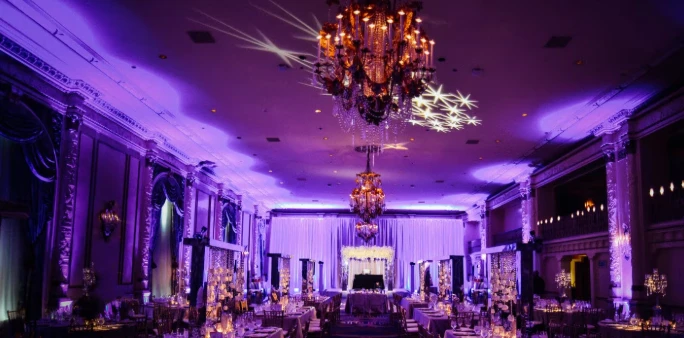
Wedding and banquet events have completely different lighting requirements compared with concerts or theaters.
The purpose of wedding lighting is not to create strong visual impact, but to create an elegant, romantic, and comfortable atmosphere.
Guests usually expect the venue to look:
• Warm;
• Beautiful;
• Premium;
• Natural in photos and videos.
A common mistake is using too much bright white light. Cold and flat lighting can make the venue feel uncomfortable and reduce the quality of photos.
Warm White and Soft Colors Create Better Results
Professional wedding lighting usually uses warm tones such as:
• Warm white;
• Champagne;
• Gold;
• Soft pink;
• Amber.
These colors can make the venue feel more luxurious and emotional.
LED wash lights and LED par lights are widely used in wedding applications because they can easily create:
• Wall washing effects;
• Background lighting;
• Table area atmosphere;
• Stage decoration lighting.
For example, LED par lights placed around the venue can transform simple walls into beautiful color backgrounds, while moving head wash lights can provide dynamic effects during important moments such as the entrance of the bride and groom.
Color Rendering Is Important for Wedding Photography
Today, almost every wedding includes professional photography and video recording.
Therefore, lighting quality is not only judged by people in the venue but also by cameras.
Poor-quality LED fixtures may cause:
• Unnatural skin tones;
• Weak color details;
• Unpleasant video images.
For wedding applications, Colorful recommends choosing lighting fixtures with:
• High CRI performance;
• Smooth dimming;
• Stable white balance;
• Flicker-free technology.
The right lighting system helps photographers capture better images and creates a more memorable experience for guests.
5. TV Studio and Live Streaming Lighting: Designed for Cameras
Live streaming and video production create higher requirements for stage lighting.
A lighting effect that looks excellent to the human eye may not always work well on camera.
Cameras are more sensitive to:
• Color temperature differences;
• Light flickering;
• Excessive saturation;
• Poor color reproduction.
Therefore, broadcast lighting requires more professional control.
Keep Front Lighting Stable
The most important rule for camera-based applications is maintaining consistent front lighting.
The key light should provide:
• Natural facial appearance;
• Balanced brightness;
• Accurate skin color.
Professional studios usually prefer:
• Neutral white lighting;
• Adjustable color temperature;
• High CRI LED fixtures.
Avoid Flicker Problems
Some low-quality LED fixtures may appear normal to the human eye but create visible flickering or horizontal lines when recorded.
This happens because the camera sensor captures LED refresh patterns.
For streaming and broadcast applications, customers should select:
• Flicker-free LED fixtures;
• High refresh rate drivers;
• Professional dimming systems.
Colorful stage lighting products are designed with modern LED technology to provide stable performance for both live audiences and camera environments.
6. How to Choose the Right Stage Lighting Fixture?
Different lighting fixtures have different functions. Understanding the role of each fixture is the first step to creating an effective lighting system.
Beam Moving Head Light
Main Features:
• Narrow beam angle;
• Extremely bright output;
• Strong aerial effects;
• Fast movement.
Best Applications:
• Concerts;
• Festivals;
• Nightclubs;
• Large events.
Beam lights are designed to make light visible in the air and create dramatic stage effects.
LED Wash Moving Head Light
Main Features:
• Wide coverage;
• Smooth color mixing;
• Soft lighting effect;
• Flexible movement.
Best Applications:
• Concert stages;
• Theater backgrounds;
• Weddings;
• Events.
Wash lights are ideal for creating overall stage atmosphere and color environments.
LED Par Light
Main Features:
• Simple structure;
• High reliability;
• Cost-effective;
• Strong color output.
Best Applications:
• Small stages;
• Wedding venues;
• Wall lighting;
• Fixed installation projects.
LED par lights are often used as basic color lighting equipment because they provide excellent value and easy operation.
Profile Light
Main Features:
• Precise beam control;
• Sharp edges;
• Accurate positioning.
Best Applications:
• Theater;
• Studio;
• Conference stage;
• Presenter lighting.
Profile lights are the perfect choice when accurate illumination is required.
7. Understanding LED Color Technology: RGB, RGBW, and Advanced Color Mixing
Modern LED stage lighting has greatly improved color performance.
Different LED engines provide different color capabilities.
RGB LED
RGB uses red, green, and blue LEDs to create colors.
Advantages:
• Strong saturated colors;
• Good for entertainment lighting;
• Cost-effective.
However, RGB alone may not create perfect white or soft pastel colors.
RGBW LED
RGBW adds a dedicated white LED.
Advantages:
• Better white output;
• More natural pastel colors;
• Improved brightness.
RGBW is suitable for applications requiring both colorful effects and white illumination.
RGBA and RGBACL Technology
Advanced LED systems add more color channels, such as:
• Amber;
• Cyan;
• Lime.
These technologies provide:
• More accurate color reproduction;
• Better warm colors;
• More natural skin tones;
• Professional camera performance.
For premium applications such as theaters, studios, and high-end events, advanced color systems provide better creative possibilities.
8. Colorful Professional Recommendations: Choose Lighting Based on Your Real Needs
Selecting stage lighting equipment is not simply choosing the brightest fixture or the lowest price product.
The correct choice depends on:
• What type of event you produce;
• What atmosphere you want to create;
• Whether cameras are involved;
• How large the venue is;
• What control system you use.
A professional lighting solution should balance:
• Brightness;
• Color quality;
• Reliability;
• Flexibility;
• Cost efficiency.
Colorful provides professional stage lighting solutions for global customers, including:
• Beam moving head lights;
• LED wash moving head lights;
• LED par lights;
• LED strobe lights;
• Stage lighting accessories.
With reliable LED technology, professional manufacturing experience, and a deep understanding of different applications, Colorful helps distributors, rental companies, and event professionals create impressive lighting experiences.
The best stage lighting is not only about making a stage brighter.
It is about using light to tell a story, create emotions, and deliver unforgettable experiences.
Choose the right lighting. Choose Colorful.


