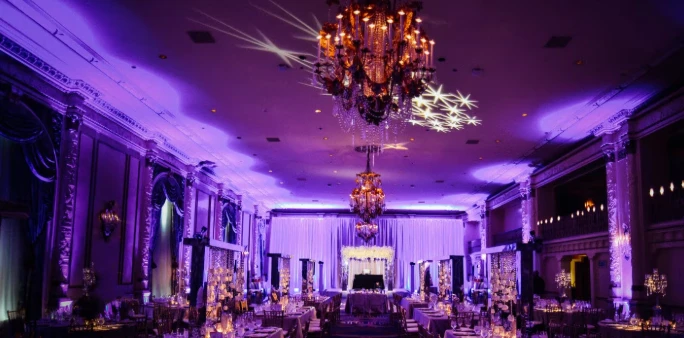
Stage-lighting terminology can be confusing because the names do not all describe the same thing. Moving head refers to how a fixture moves. Beam, Spot, and Wash describe optical functions. LED describes the light-source technology. Strobe describes a particular lighting effect.
That distinction matters when comparing the types of stage lights. A fixture can be bright enough on paper and still be poorly suited to the job if its beam, coverage, color performance, control, or installation requirements do not match the project.
This guide starts with the ten stage lighting fixtures buyers encounter most often, then explains how to compare them by application, throw distance, beam angle, color quality, control system, installation environment, and long-term operating requirements.
Quick Comparison: What Are the Main Types of Stage Lights?
The table below gives a practical overview before each fixture type is examined in more detail.
|
Type |
Main Purpose |
Beam Characteristics |
Best Applications |
Key Specs |
|
Beam Moving Head |
Aerial effects |
Very narrow, intense |
Concerts, festivals, large clubs |
Beam angle, lux, prism, pan/tilt |
|
Spot Moving Head |
Projection and controlled focus |
Defined, focusable |
Theatre, corporate events, concerts |
Focus, zoom, gobos, iris |
|
Wash Moving Head |
Broad color coverage |
Wide, soft-edged |
Live stages, weddings, theatres |
Zoom, color system, CRI, uniformity |
|
LED PAR Light |
Fixed wash and general coverage |
Fixed or moderately wide |
Small stages, churches, bars |
Beam angle, RGB/RGBW, CRI, IP |
|
Profile / Ellipsoidal |
Precise shaped illumination |
Sharp and controlled |
Theatre, studio, presentations |
Focus, shutters, gobos, color quality |
|
Fresnel Light |
Soft key/fill illumination |
Soft-edged, adjustable |
Theatre, studio |
Beam range, output, dimming, color quality |
|
Strobe Light |
Rapid flashing effects |
Short, intense bursts |
EDM, concerts, clubs |
Flash rate, pixels, color, control |
|
Blinder / Audience Light |
Audience-facing impact |
Broad, high-output |
Concerts, festivals |
Output, dimming, CCT, power |
|
Laser / Effect Light |
Specialized patterns and effects |
Highly directional |
Clubs, concerts, entertainment venues |
Laser class/output, scanning, control |
|
Hybrid Beam/Spot/Wash |
Multiple functions in one fixture |
Variable |
Touring, rental, multipurpose venues |
Zoom, optics, gobos, output |
These categories overlap because they describe different characteristics. Understanding that taxonomy first makes product comparisons much more useful.
How Stage Lights Are Classified

Stage lights can be classified by movement, lighting role, optical function, or light-source technology. Keeping those dimensions separate prevents misleading comparisons such as treating "moving head" "Beam" and "LED" as equivalent fixture categories.
1. Beam Moving Head Lights
Beam moving heads are designed primarily for narrow, high-intensity aerial effects.
What the Beam Light Can do
A Beam fixture concentrates its output into a narrow shaft instead of spreading it over a broad area.
With haze or atmospheric effects in the air, that concentrated shaft becomes highly visible and can form part of the stage's visual architecture.
This is why Beam fixtures are often positioned above, behind, or around the performance area rather than treated as general performer lighting.
Best Applications
Beam fixtures make the most sense where visual scale and long-distance effects matter:
concerts, festivals, nightclubs, arenas, large entertainment venues.
They are less useful as the main solution for a low-ceiling room, soft facial illumination, or broad short-distance coverage.
A small venue can own Beam fixtures, but that does not mean Beam should dominate its lighting system.
Key Specifications to Check
Start with the optics rather than wattage.
Beam angle affects how tightly the light is concentrated.
Photometric output at a stated distance gives a more useful view of long-throw performance than source wattage by itself. Entertainment-lighting standards such as ANSI E1.9, E1.25, and E1.41 define approaches for measuring and reporting stage/studio luminaire photometric performance, including solid-state luminaires.
Also compare:
prism type and rotation, focus, color system, pan/tilt range and speed, DMX personalities, frost etc. if fitted
When comparing lux data between suppliers, check that the test distances and optical conditions are comparable.
When You Need to Choose a Beam Light
Beam is a strong choice when you need:
visible aerial shafts, long-throw visual effects, fast movement, prism effects, high-impact concert or club programming
Look elsewhere when the main job is:
broad stage coverage, soft performer illumination, camera key light, precise shuttering, short-range wash.
The decision is about concentration versus coverage, not which fixture has the larger wattage number.
2. Spot Moving Head Lights
Spot moving heads are designed for controlled focus and projection.
What Makes Spot Different
A Spot normally gives the programmer more image control than a Beam.
Common functions include:
fixed or rotating gobos, motorized focus, zoom, iris, color wheels or color mixing
That makes Spot fixtures useful for projected patterns, textures, logos, and controlled areas of light.
A Beam is primarily about the visible shaft. A Spot is more about what you can project and where you can place it.
Best Uses
Spot moving heads are useful for:
theatre, corporate events, concerts, branded events, presentations, scenic projection.
A corporate show may value logo projection. A theatre may value controlled texture. A concert may use Spots between narrow Beam effects and broad Wash coverage.
Specs to Compare
Gobo system: check fixed versus rotating gobos, indexing, rotation, and replaceability.
Focus: important when gobos need to remain sharp at different throws.
Zoom: changes image or beam size without moving the fixture.
Iris: reduces the illuminated diameter.
Color system: compare it according to the actual design requirements rather than simply counting color features.
If projection quality matters, optics and focus performance deserve more attention than a simple wattage comparison.
3. Wash Moving Head Lights
Wash moving heads provide broad color coverage with motorized positioning.
What Wash Lighting Does
A Wash spreads light across a larger area than a Beam or Spot.
Typical jobs include:
Stage coverage: Lighting that evenly covers the stage area.
Color wash: Broad colored light spread across a large area.
Performer illumination: Lighting used to make performers clearly visible.
Scenic color: Colored lighting used to enhance scenery and set pieces.
Background fill: Light used to softly illuminate the background.
Motorized movement allows that coverage to change position during a show. Zoom-equipped models can also move between tighter and broader fields without being physically relocated.
When Wash Is Better Than Beam
If the requirement is to cover the stage evenly with color, a Beam can be extremely bright and still be the wrong tool.
Wash is generally the better starting point for:
Broad stage color: Wide colored lighting across the stage.
Wedding or event coverage: General lighting used to cover event spaces evenly.
Scenic wash: Broad, soft light used to illuminate scenery.
Performer fill: Soft light used to reduce shadows on performers.
Flexible general coverage: Versatile lighting for covering different areas and needs.
Beam is the stronger choice when the narrow aerial shaft itself is the effect.
Important Specs
Zoom range determines how much coverage flexibility the fixture provides.
Color system affects saturated colors, whites, pastels, and the available gamut.
Dimming matters in applications that need smooth transitions or low-level output.
Color fidelity becomes more important where faces, costumes, scenery, or products need to look natural.
Field uniformity tells you whether the Wash produces a usable, even field rather than a strong center with weak or inconsistent edges.
Those characteristics usually tell a buyer more about real Wash performance than LED wattage by itself.
4. LED PAR Lights
LED PAR Lights
LED PAR lights are commonly used for fixed color wash, general stage coverage, and scenic lighting. Compared with moving-head fixtures, they are mechanically simpler and are usually aimed manually during installation.
What Is an LED PAR Light?
A PAR fixture is typically positioned and focused when it is installed. It does not normally use motorized pan and tilt for repositioning.
After installation, the fixture can still be controlled through DMX. Common controllable functions include:
Color: The hue or tone of the light.
Dimming: Adjusting the brightness of the light.
Effects: Built-in lighting effects such as color changes, fades, or chases.
Scenes: Preset combinations of lighting settings.
Strobe: Rapid flashing effects, when supported by the fixture.
Because PAR fixtures have relatively simple mechanics, they are practical for fixed installations, compact venues, and systems that require reliable general-purpose lighting.
Where PAR Lights Work Best
Common applications include:
Small stages: General lighting for compact performance areas.
Weddings: Atmospheric lighting and event-space coverage.
Churches: Lighting for worship stages, speakers, and interior areas.
Bars: Decorative lighting, entertainment effects, and general color wash.
Background lighting: Lighting used to illuminate or enhance backgrounds.
Truss wash: Broad lighting mounted on truss structures to cover stage or venue areas.
Scenic color: Colored light used to enhance scenery and visual atmosphere.
In smaller venues, a well-designed PAR system may provide more useful stage coverage than adding moving fixtures only for additional features.
RGB vs. RGBW vs. Multi-Color PAR
Different PAR fixtures use different LED color systems.
RGB: Uses red, green, and blue emitters to create mixed colors.
RGBW: Adds a dedicated white emitter to the RGB system.
Multi-color systems: May include amber, lime, UV, or other additional emitters.
Additional color channels can expand the available color range and improve certain types of white-light reproduction. However, a higher number of LED colors does not automatically mean better color quality.
The most suitable color system depends on the application.
For example, a nightclub may prioritize strong saturated colors and dynamic effects, while a wedding venue, theatre, church, or studio may place greater importance on:
Natural white: Clean and realistic white light.
Skin tones: Accurate and natural-looking skin colors.
Consistency: Stable and uniform color and light output.
Smooth dimming: Gradual brightness changes without visible steps.
Camera performance: Stable and natural-looking output for video and photography.
The color engine should therefore be selected according to the required lighting role rather than simply by comparing the number of color channels.
Specifications Buyers Should Compare
When comparing LED PAR lights, important specifications include:
Beam angle: The width of the projected light beam.
Photometric output at working distance: The amount of usable light delivered at a specific distance.
Color system: The LED combination used to create and mix colors.
Color fidelity: How accurately the fixture reproduces natural colors.
DMX modes: The available channel configurations for fixture control.
IP rating: The level of protection against dust and water.
Flicker performance: How well the fixture avoids visible flicker, especially when recorded by cameras.
Camera Use
Camera performance should be evaluated separately from normal visual performance.
A fixture may appear stable to the human eye but still produce flicker, banding, or other visible artifacts on camera. These problems can depend on factors such as shutter speed, frame rate, dimming method, and LED driver design.
For video, broadcast, studio, or event-recording applications, flicker performance should therefore be considered an important part of fixture selection.
5. Profile / Ellipsoidal Lights
Profile or Ellipsoidal fixtures are built for precise beam control.
Precise Beam Control
A Profile can illuminate a defined stage area while limiting spill onto scenery, screens, or adjacent performance zones.
That makes it useful when accuracy is more valuable than movement.
Typical targets include:
Performers: People being lit on stage.
Lecterns: Speaking stands that need focused lighting.
Scenic details: Specific set elements highlighted with light.
Presentation areas: Areas where speakers or presentations take place.
Controlled key-light zones: Specific areas with precise main lighting.
Shutters and Gobos
Framing shutters allow the operator to shape the beam and remove light from unwanted areas.
Gobos can project:
Patterns: Shapes or designs projected with light.
Textures: Visual surface effects created with light.
Logos: Brand symbols or graphics projected onto a surface.
Scenic images: Projected images used to enhance stage scenery.
For buyers, the important question is not simply whether a fixture contains shutters or a gobo slot. It is how accurately and consistently the optical system performs the required task.
Best for Theatre and Studio
Profiles are common in:
theatres, studios, houses of worship, presentation stages, corporate environments
Those applications often benefit from controlled spill and predictable beam placement.
Why Color Quality Matters
A fixture used to illuminate people or objects needs to be judged differently from an effect fixture.
CRI remains widely used in product specifications, but CIE has documented limitations in using the traditional general Colour Rendering Index (R_a) as a complete representation of color fidelity for modern sources. In its 2025 position statement, CIE recommends beginning the transition toward its General Colour Fidelity Index (R_f), with parallel reporting during the transition.
For practical purchasing, this means:
Do not treat a single CRI number as the entire color-quality story.
For camera applications, also check camera-oriented metrics and actual flicker behavior.
6. Fresnel Lights
Fresnels are designed for soft-edged, controllable illumination.
Soft-Edge Lighting
A Fresnel produces a gradual transition between the lit area and the surrounding darkness.
Typical uses include:
Key light: The main light used to illuminate and shape the subject.
Fill light: Softer light used to reduce shadows.
Performer illumination: Lighting used to make performers clearly visible.
Theatre lighting: Lighting designed for stage performances and dramatic effects.
Studio lighting: Controlled lighting used for photography, video, or broadcast.
Many Fresnels allow beam adjustment while retaining their characteristic soft edge.
Fresnel vs Profile
|
Factor |
Fresnel |
Profile / Ellipsoidal |
|
Beam edge |
Soft |
Sharp and controlled |
|
Main role |
Key/fill illumination |
Precise shaping |
|
Shutters |
Usually limited |
Common |
|
Gobo projection |
Not primary |
Common |
|
Coverage |
Smooth |
Defined |
|
Typical use |
Theatre, studio |
Theatre, studio, presentations |
Choose Fresnel when the goal is softer illumination with smooth transitions.
Choose Profile when the design depends on precise edges, shuttering, or projection.
They are often complementary rather than competing fixtures.
7. Strobe Lights
Strobes produce short, rapid flashes of light rather than serving primarily as continuous illumination.
What a Strobe Does
The effect comes from the contrast between the flash and the surrounding lighting state.
Modern LED Strobes may also offer:
RGB effects: Color effects created by mixing red, green, and blue light.
Pixel control: Individual control of separate LEDs or light sections.
Segment control: Independent control of different fixture sections.
Continuous-output modes: Modes that keep the light output steady and uninterrupted.
Advanced DMX programming: Detailed control of complex lighting functions through DMX.
Concert and EDM Applications
Strobes commonly appear during:
Musical drops: Sudden moments in music emphasized by lighting.
Climaxes: Peak moments enhanced with strong lighting effects.
Rhythmic sequences: Lighting patterns that follow the beat or rhythm.
Cue changes: Lighting changes triggered at specific moments.
High-energy transitions: Fast, dramatic lighting changes that create excitement.
They work best as intentional accents. If every cue becomes a Strobe cue, the visual effect quickly loses value.
8. Blinder / Audience Lights
Blinders are used primarily for audience-facing illumination and high-impact moments.
Performer Lighting vs Audience Lighting
Most stage fixtures are aimed toward performers or scenery.
A Blinder is commonly aimed toward the audience.
That distinguishes it from a Strobe:
Strobe: defined mainly by rapid flashing.
Blinder: defined mainly by audience-facing, high-output impact.
Some modern fixtures combine both functions, but the programming purpose remains different.
When Blinders Are Used
Typical cues include:
choruses, crowd participation, finales, festival drops, major musical accents
Because they are audience-facing, output and cue duration need to be chosen for the actual venue and production.
9. Laser and Effect Lights
Laser and effect fixtures add specialized visual layers rather than serving as general stage illumination.
What Counts as an Effect Light
This category can include:
laser projectors, pattern effects, derby-style fixtures, pixel effects, specialized moving effects
"Effect light" should not become a catch-all category for every fixture that moves.
The defining question is whether its primary role is usable illumination or visual effect.
Laser vs Conventional Stage Fixtures
Beam, Spot, Wash, PAR, and Profile fixtures generally create conventional illuminated beams or fields.
Lasers can create highly directional lines, scanning patterns, and other specialized effects.
A Laser therefore does not normally replace:
stage wash, key light, fill light, performer illumination
It adds another visual layer.
Appropriate Applications and Safety
Laser effects are commonly associated with entertainment settings such as concerts, clubs, and visual shows, but purchasing and use requirements vary by jurisdiction.
In the United States, entertainment laser products are regulated by the FDA, and higher-powered laser light shows can involve reporting and variance requirements.
Before specifying a laser, verify:
product classification, legal requirements in the destination market, operator requirements, installation conditions, potential audience exposure
Do not treat a Laser as simply "a stronger effect light."
10. Hybrid Beam/Spot/Wash Fixtures
Hybrid Beam/Spot/Wash-or BSW-fixtures combine multiple optical roles in a single moving head.
How BSW Fixtures Work
Depending on the product, a hybrid may use:
zoom, focus, gobos, prism, iris, color systems, adjustable optics
In Beam mode, the goal is a concentrated shaft.
In Spot mode, the fixture prioritizes focus and projection.
In Wash mode, the optical system broadens the field.
Not every hybrid performs those three jobs equally well. Some lean toward Beam performance; others are designed as more balanced multipurpose fixtures.
The label "BSW" should therefore start the comparison, not end it.
Advantages
Hybrid fixtures make particular sense for:
rental companies, touring crews, multipurpose venues, flexible event inventories
One fixture family can serve several kinds of job, which can simplify:
inventory, transport, setup, programming, cross-project deployment
For a rental operation that changes venue and production type every week, that flexibility can be more important than extracting maximum performance from one specialized function.
Limitations
Versatility always comes with trade-offs.
A dedicated Beam may produce a tighter or more optimized aerial effect.
A dedicated Wash may offer better field quality or coverage.
A dedicated Spot may offer stronger projection performance.
Hybrids may also introduce:
additional mechanical complexity, greater weight, higher service complexity, optical compromises, higher purchase cost
A BSW also does not replace a precision Profile simply because both fixtures can project gobos.
A useful buying rule is:
Choose hybrid when operational flexibility matters most.
Choose dedicated fixtures when specialized optical performance matters most.
Beam vs Spot vs Wash: What Is the Difference?

Beam, Spot, and Wash moving heads solve three different lighting problems.
|
Factor |
Beam |
Spot |
Wash |
|
Main use |
Aerial effects |
Projection/focus |
Coverage |
|
Beam character |
Very narrow |
Controlled, focusable |
Wide and soft |
|
Coverage |
Small |
Moderate |
Large |
|
Edge |
Defined shaft |
Controlled |
Soft |
|
Gobos |
Common |
Important |
Usually secondary |
|
Projection |
Limited |
Strong |
Low |
|
Best role |
Long-throw effects |
Image/focus control |
Stage wash |
The simplest buyer shortcut is:
Need visible aerial shafts? → Beam
Need gobos or controlled focus? → Spot
Need broad color coverage? → Wash
They often work better together than as substitutes.
A concert can use Wash fixtures for coverage, Beam fixtures for aerial structure, and Spots for projected texture or performer emphasis.
How to Choose Stage Lights for Your Venue
Knowing fixture names is useful. Choosing the right products requires venue information.
Start with the physical job, then move to optics, color, control, environment, and ownership.
Step 1 - Define Venue Size and Throw Distance
Before comparing fixtures, record:
stage width, stage depth, fixture mounting height, fixture-to-target distance, ceiling height, available mounting positions
These measurements are more useful than calling the venue "small," "medium," or "large."
Throw distance affects:
required output, beam angle, coverage
appropriate fixture type
A fixture that works well at 5 meters may produce a very different result at 20 meters.
That is why wattage alone should never be used as a brightness shortcut.
Step 2 - Decide the Lighting Purpose
Define what each position needs to achieve.
Visibility
Profile, Fresnel, Wash, or suitable PAR fixtures.
Color wash
Wash or PAR.
Performer focus
Spot or Profile.
Aerial effect
Beam.
Audience effect
Blinder, Strobe, Laser, or other effect fixtures.
One fixture does not need to perform every role.
A useful lighting system usually combines different optical tools.
Step 3 - Check Beam Angle and Coverage
A narrow beam concentrates light in a smaller area.
A wide beam spreads light across a larger area.
Distance changes the result: the farther a fixture is from the target, the larger the illuminated diameter becomes.
For a simple geometric estimate:
Beam diameter ≈ 2 × throw distance × tan(beam angle ÷ 2)
Use this only as a planning approximation. Final decisions should be based on manufacturer photometric information, including how beam angle or field angle is defined and under what conditions output was measured. ESTA maintains entertainment-specific standards for reporting and measuring stage/studio luminaire photometric performance.
The useful question is not:
"Is 10° better than 25°?"
It is:
"At my mounting distance, which angle produces the coverage I need?"
Step 4 - Compare Color Quality

Do not mix up color mixing with color fidelity.
Color Mixing
RGB, RGBW, RGBL, RGBA, and similar terms describe the LED channels used to create colors. The best color engine depends on the job.
Color Fidelity
CRI remains common in lighting specifications, but it should not be treated as a complete color-quality score.
CIE's 2025 position statement recommends that the lighting community begin adopting the newer General Colour Fidelity Index (R_f), with (R_f) and traditional (R_a) reported in parallel during the transition.
For a nightclub, the purchasing priority may be saturated colors and effects.
For a theatre or studio, natural faces and consistent whites can matter much more.
Camera Use
Camera-facing lighting needs another layer of evaluation.
The European Broadcasting Union's TLCI work was developed specifically around television-camera response rather than simply relying on visual color-rendering assessment.
For broadcast, livestreaming, or recorded events, also verify flicker performance under the intended camera settings.
Step 5 - Check Control Requirements

"Supports DMX" is only the start of a control-system comparison.
The current DMX512-A standard is ANSI E1.11-2024, which defines digital transmission intended to allow interoperability between entertainment-lighting controllers and controlled equipment from different manufacturers.
What the buyer needs to compare is how the fixture uses that system.
A simple DMX personality may expose:
dimmer, color, pan, tilt
An extended personality may add:
fine movement, gobos, prism, zoom, focus, pixel control, macros
More channels give the programmer more control, but they also require more programming resources.
RDM
RDM adds bidirectional device management to DMX-based networks.
The current ANSI E1.20-2025 standard covers device discovery, remote DMX-address configuration, and status or fault reporting over a DMX512 data link.
That can be especially useful when many fixtures must be deployed, addressed, or maintained.
Art-Net
Art-Net operates at the network layer. Its owner, Artistic Licence, describes it as a protocol for transporting DMX512 and RDM lighting data over Ethernet.
For a buyer, the useful questions are:
Which DMX modes do we need?
Do we need RDM?
How many universes will the system use?
Is the lighting network already based on Art-Net, sACN, or another architecture?
What console and data-distribution equipment already exists?
Control compatibility should be planned as a system, not checked as a single box on the fixture datasheet.
Step 6 - Indoor or Outdoor?

An IP rating describes enclosure protection. It does not describe every condition of a complete outdoor stage installation.
IEC 60529 defines the IP Code as a classification for degrees of protection provided by electrical-equipment enclosures.
For buyers, the practical decision must also consider:
direct rain exposure, dust, temporary versus permanent installation, protected or exposed mounting position, power and data connectors
cable routing, operating temperature, maintenance procedures
A covered wedding venue and an exposed festival field can both be described as "outdoor," but the equipment faces very different conditions.
Entertainment-industry standards also treat outdoor electrical safety as broader than the fixture enclosure alone; ESTA's ANSI E1.58 addresses temporary outdoor portable stage and studio electrical installations.
Use this rule:
Match the documented protection rating and installation requirements to the actual site conditions.
Do not reduce the decision to:
"IP65 = suitable everywhere outdoors."
Step 7 - Consider Rigging, Power and Maintenance

A good lighting effect does not automatically make a good B2B purchase.
Evaluate the fixture throughout its working life.
Installation
Structural and rigging calculations should be handled under the applicable professional and regulatory requirements. ESTA's ANSI E1.21-2024, for example, addresses temporary ground-supported structures used in outdoor entertainment production.
The purchasing article should identify what needs checking-not pretend to replace qualified structural design.
Maintenance
Before placing a larger B2B order, ask:
Are common replacement parts available?
Can key modules be serviced easily?
Is firmware support available?
Is technical documentation provided?
What does the warranty cover?
What is the expected spare-parts response?
For Coloful Stage Lighting procurement and quotation material, use the confirmed warranty term of 12 months consistently.
Do not publish conflicting warranty periods across product, category, FAQ, and quotation pages.
Best Stage Lights by Application

Different applications call for different priorities.
|
Application |
Primary Lights |
Supporting Lights |
Priority |
|
Concert |
Beam + Wash |
Spot, Strobe, Blinder |
Throw, movement, aerial effect |
|
Theatre |
Profile + Fresnel/Wash |
Spot |
Precision, color, low noise |
|
Wedding |
PAR + Wash |
Moving Spot |
Skin tone, aesthetics, low noise |
|
Church |
PAR + Profile/Wash |
Moving Head |
Color quality, flicker, control |
|
Nightclub |
Beam + Effect |
Strobe, Laser |
Movement, effects, durability |
|
TV Studio |
Profile + Fresnel/Wash |
PAR |
Color fidelity, flicker, noise |
|
Outdoor Festival |
Beam + Wash |
Strobe, Blinder, Effect |
Protection, output, rigging, reliability |
Concerts
Concert systems often need both coverage and large-scale effects.
Wash fixtures cover the performance area. Beam fixtures create aerial structure. Spots add projection or controlled focus. Strobes and Blinders provide short, high-impact cues.
The real buying priorities are usually:
Throw distance: The distance from the fixture to the target area.
Output at that distance: The brightness delivered at the working distance.
Movement: The fixture's ability to pan, tilt, or move.
Programming flexibility: How easily different effects and functions can be programmed.
Rigging: The method and hardware used to mount the fixture safely.
Serviceability: How easy the fixture is to maintain and repair.
Theatre
Theatre lighting usually values control more than spectacle.
Profiles and Fresnels can provide accurate performer and scenic lighting, while moving Spots or Washes add flexibility where the production needs it.
Pay particular attention to:
Beam control: How precisely the light beam can be shaped and directed.
Color quality: The accuracy and consistency of the produced colors.
Smooth dimming: Gradual brightness changes without visible jumps.
Fan noise: The sound produced by the fixture's cooling fan.
Positioning consistency: How accurately the fixture returns to the same position.
Weddings
Wedding lighting often needs to look good both in the room and on camera.
PAR and Wash fixtures can provide ambient and stage color, while compact moving Spots can add entrances, highlights, or dance-floor effects.
Color quality, fan noise, fixture appearance, and flicker can matter more than extreme aerial output.
Churches
Many churches now design for both the room and livestream cameras.
That makes these factors important:
Skin tones: How naturally and accurately skin colors appear under the light.
Flicker: Unwanted rapid changes in brightness, especially visible on camera.
Dimming: How smoothly and accurately brightness can be adjusted.
White-light quality: The naturalness and accuracy of white light.
Controllability: How easily and precisely the fixture can be controlled.
Quiet operation: Low-noise performance during use.
A fixture that looks bright to the audience can still be a poor camera fixture.
Nightclubs
Nightclubs generally place more emphasis Beam, Strobe, Laser, and other effect fixtures can therefore take a larger role than in theatre or studio systems.
These are starting configurations, not fixed fixture counts.
Final system design depends on the stage, mounting positions, production requirements, and budget.
Stage Lighting Buyer Checklist
A useful RFQ should describe the project, not just request a quantity.
"Quote 20 moving heads" does not tell the manufacturer what those moving heads need to do.
Lighting Requirements
Describe the job:
stage wash, performer illumination, gobo projection, aerial Beam effects, audience effects, camera or livestream use
Optical and Color Requirements
Where known, provide:
beam or zoom range, required photometric output, color system, white-light requirements, CRI / (R_f) / TLCI needs where relevant
flicker requirements
If you do not know the numbers, describe the visual result you need.
Control and Electrical Requirements
Confirm:
DMX requirements: The DMX control features and channel setup needed.
RDM requirement: Whether remote device monitoring and configuration are needed.
Network protocol: The communication system used for network-based lighting control.
Local voltage/frequency: The local electrical voltage and frequency standard.
Power connectors: The type of connectors used for electrical power.
Signal connectors: The type of connectors used for control or data signals.
Installation and Operation
Include:
Maximum practical fixture weight: The heaviest fixture that can be safely and conveniently installed.
Rigging environment: The structure and conditions where fixtures will be mounted.
Noise requirements: The acceptable sound level from fans, motors, and other components.
IP requirement: The required level of protection against dust and water.
Expected operating conditions: The temperature, weather, usage time, and other conditions during operation.
Commercial and Service Requirements
Clarify:
Quantity: The number of units required.
Destination market: The country or region where the product will be sold or used.
Target budget: The planned spending range.
OEM/private-label requirements: Custom branding or product specifications for the buyer's brand.
Packaging requirements: Specific needs for boxes, labels, protection, or presentation.
Spare parts: Replacement components needed for maintenance or repairs.
Technical support: Assistance with installation, operation, troubleshooting, and maintenance.
12-month warranty
A manufacturer can usually make a better recommendation from clear project conditions than from a guessed wattage or model number.
Send your stage lighting requirements for a fixture recommendation or quotation based on the actual application.
Common Stage Lighting Mistakes
Choosing by Wattage Alone
Wattage is simple to compare, which makes it easy to misuse.
It does not tell you: beam distribution, optical efficiency, illuminance at working distance, coverage, field quality
Use it as one specification, not as a substitute for performance data.
Using Too Many Beam Lights
A system can look impressive in haze while illuminating performers badly.
Beam fixtures create aerial structure. They do not automatically provide the broad, usable coverage required for people and scenery.
Plan lighting roles first, then decide the fixture count.
Ignoring Beam Angle
A beam that is too narrow can produce hot spots and gaps.
A beam that is too wide can spread the output beyond the area where it is needed.
Check beam angle at the actual working distance.
Ignoring Flicker for Cameras
Human vision is not a camera test.
For livestreaming, broadcast, video production, or high-frame-rate recording, verify flicker performance under realistic camera settings.
Frequently Asked Questions
What are the main types of stage lights?
Common stage lighting fixtures include Beam, Spot, Wash, LED PAR, Profile/Ellipsoidal, Fresnel, Strobe, Blinder, Laser/effect lights, and hybrid Beam/Spot/Wash fixtures.
These terms describe different characteristics: some refer to optical function, some to mechanical movement, some to source technology, and some to visual effect.
What is the difference between Beam, Spot, and Wash lights?
Beam creates a concentrated aerial shaft.
Spot provides controlled focus and projection.
Wash provides broad coverage.
Choose them according to the lighting role rather than treating them as interchangeable moving heads.
What stage lights are best for concerts?
Beam and Wash fixtures are common starting points because they cover aerial effect and broad stage color. Spot, Strobe, and Blinder fixtures can then be added according to the production.
The final system depends on throw distance, stage size, rigging positions, and creative requirements.
What stage lights are best for a small venue?
Small venues often get more practical value from PAR lights, compact Wash fixtures, and smaller moving Spots than from a large inventory of long-throw Beam fixtures.
Start with ceiling height, throw distance, and required coverage.
Are LED stage lights better than traditional stage lights?
Not in every situation.
LED technology can offer practical advantages in power, color control, and source maintenance, but the correct fixture still depends on optics, output, color quality, dimming, noise, and the application.
Compare complete luminaires rather than source labels.
How many stage lights do I need?
There is no universal number.
Start with:
Application: What the lighting will be used for.
Stage or venue dimensions: The size of the space to be lit.
Mounting/throw distance: The distance between the light and the target area.
Indoor or outdoor environment: Where the fixtures will operate.
Required lighting roles: The specific lighting functions needed.
Approximate quantity: The estimated number of fixtures required.
Control requirements: How the lighting needs to be controlled.
Local power standard: The local voltage and electrical requirements.
Target budget: The expected spending range.
Destination country: The country where the equipment will be used or shipped.
Count the jobs the system must perform before counting fixtures.
What beam angle should I choose?
Define the target area and fixture distance first.
A narrower beam concentrates output into a smaller area. A wider beam increases coverage.
Use manufacturer photometric data for final decisions rather than relying on a generic narrow-versus-wide rule.
What specifications should I give a stage lighting manufacturer when requesting a quote?
Provide bellow info:
Application: The intended use of the lighting system.
Stage or venue dimensions: The size of the stage or event space.
Mounting/throw distance: The distance from the fixture to the area being lit.
Indoor or outdoor environment: Whether the equipment will be used inside or outside.
Required lighting roles: The lighting functions the fixtures need to perform.
Approximate quantity: The estimated number of fixtures needed.
Control requirements: The type and level of lighting control needed.
Local power standard: The voltage and electrical standard used locally.
Target budget: The planned amount available to spend.
Destination country: The country where the equipment will be used or delivered.
OEM requirements, if applicable
If you do not know the exact fixture model, describe the project instead of guessing specifications.
Conclusion
There is no single "best" stage light. The right fixture depends on the lighting role it needs to perform and the conditions of the project, not simply on the fixture name, wattage, or number of features.
A practical selection process should follow this order:
Application → Venue → Beam/Coverage → Color & Control → Environment → Product Selection
Start by defining what the lighting needs to achieve and where it will be used. Then evaluate throw distance, coverage area, mounting positions, color requirements, control system, indoor or outdoor conditions, rigging, power, and maintenance needs. Only after these factors are clear does it make sense to compare specific fixture models.
For a B2B project, the next step is to prepare the key project information:
venue dimensions and mounting positions, application or event type, indoor or outdoor operating environment, required lighting roles
control and color requirements, With these details, a manufacturer can determine the appropriate fixture mix, specifications, quantities, and quotation requirements for the actual project instead of recommending products from a generic catalog.
If you are preparing an RFQ, send these project details together with your target quantity and installation requirements to receive a more accurate fixture recommendation and quotation.