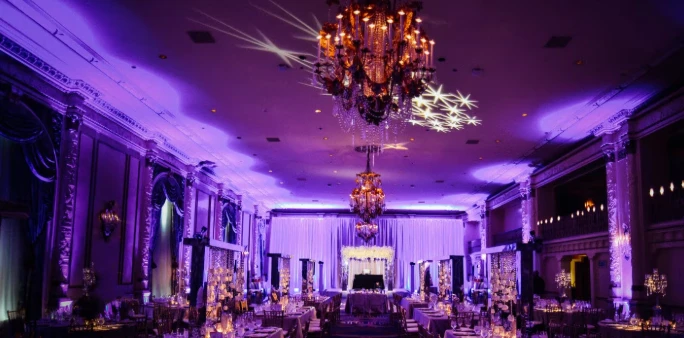
1. What Is an LED Wash Light and Why Does It Matter?
Among all professional stage lighting fixtures, LED wash lights are one of the most widely used and essential lighting tools. Unlike beam lights that create sharp aerial effects or profile lights designed for precise projection, wash lights are mainly responsible for creating atmosphere, covering large areas, and providing consistent color backgrounds.
A well-designed wash light can completely transform a stage. It can make a concert feel energetic, create an elegant atmosphere for weddings, enhance architectural spaces, or provide smooth background colors for television productions.
However, choosing a good LED wash light is not simply about selecting the fixture with the highest wattage or the most impressive specifications. Many buyers make decisions based only on brightness, LED quantity, or price, but ignore important factors such as color quality, optical design, heat management, reliability, and real-world application.
For professional users, the right question is not:
"Which wash light is the brightest?"
The better question is:
"Which wash light can deliver the right color, coverage, consistency, and reliability for my projects?"
2. Understand Different Types of LED Wash Lights
Before choosing a wash light, it is important to understand that not all wash fixtures are designed for the same purpose.
2.1 Static LED PAR Wash Lights
Static PAR lights are the most basic type of LED wash fixtures.
They usually have:
Fixed beam angle
Fixed installation position
Simple DMX control
High reliability
Lower cost
They are widely used for:
Wall washing
Stage background lighting
Wedding decoration
Small events
Architectural lighting
The biggest advantage of PAR wash lights is efficiency. A large number of units can be installed around a stage or venue to create a uniform color environment.
However, because the fixture direction cannot move, they are less flexible for dynamic shows.
2.2 Moving Head Wash Lights
Moving head wash lights combine color washing capability with motorized movement.
They provide:
Pan and tilt movement
Variable zoom
Dynamic stage effects
Flexible positioning
They are commonly used in:
Concerts
Festivals
Large events
Touring productions
Nightclubs
A moving wash can change from a wide stage floodlight into a narrow beam-like effect, allowing lighting designers to create more complex scenes.
For professional rental companies, moving wash lights often provide higher investment value because one fixture can perform multiple roles.
2.3 LED Bar Wash Lights
LED bar lights are becoming increasingly popular because of their unique visual effects.
They are suitable for:
Stage background decoration
Pixel effects
Architectural applications
DJ performances
TV studios
Many modern LED bars support:
Pixel control
Individual LED addressing
Chase effects
Gradient color transitions
They are especially effective when designers want the lighting itself to become part of the visual performance.
3. The LED Engine: RGB, RGBW, RGBA or RGBACL?
The LED source is one of the most important factors determining color quality.
Many manufacturers advertise "full color mixing", but the actual performance can be very different.
3.1 RGB LED Wash Light
RGB means:
Red
Green
Blue
By mixing these three colors, the fixture can produce thousands of colors.
Advantages:
Lower cost
Strong saturated colors
Suitable for entertainment lighting
Typical applications:
Clubs
DJ stages
Concert effects
However, RGB has limitations.
When creating white or pastel colors, RGB fixtures often produce:
Weak white
Slight green tint
Poor pastel colors
This happens because there is no dedicated white LED source.
3.2 RGBW LED Wash Light
RGBW adds a dedicated white LED.
Advantages:
Better white output
Cleaner pastel colors
Higher brightness
More natural color transition
RGBW is a better choice for:
Weddings
Corporate events
Churches
Hotels
Professional stage applications
For many professional users, RGBW is the minimum recommended configuration.
3.3 RGBA and RGBACL LED Engines
Higher-end fixtures may use:
RGBA
RGBW+A
RGBACL
6-in-1 or 7-in-1 LED systems
Additional colors such as:
Amber
Cyan
Lime
help create:
Better skin tones
Natural warm white
Champagne colors
Soft pastel colors
For example:
A wedding designer may need a soft champagne wash on the wall.
An RGB fixture may create a dirty yellow-green color.
An RGBA or RGBACL fixture can produce a much more natural golden atmosphere.
4. Beam Angle and Zoom Range: Coverage Matters
One common mistake is focusing only on brightness while ignoring beam angle.
The beam angle determines how the fixture covers space.
Wide Beam Angle
Examples:
25°-60°
Suitable for:
Large background walls
Stage washes
Venue decoration
Advantages:
Large coverage area
Smooth color blending
Fewer fixtures required
Narrow Beam Angle
Examples:
5°-20°
Suitable for:
Long-distance projection
Strong visual effects
Large venues
Advantages:
Higher intensity
Better penetration
However:
A narrow beam does not always mean better performance.
Using a narrow beam wash in a small venue may create uneven lighting and visible hotspots.
Zoom Wash Lights
Professional moving wash lights often include motorized zoom.
For example:
8°-45°
This allows the same fixture to:
Cover a small stage
Wash a large background
Create different visual effects
For rental companies, zoom capability significantly improves equipment flexibility.
5. Brightness: Why Wattage Is Not Everything
Many buyers compare wash lights only by LED power:
7×40W
19×40W
37×40W
19×60W
But wattage alone does not determine actual performance.
A professional wash light depends on:
1. LED efficiency
High-quality LEDs produce more output with less heat.
2. Optical design
Good lenses improve:
Light concentration
Uniformity
Color mixing
3. Thermal management
4. Poor heat dissipation reduces:
LED lifespan
Brightness stability
Product reliability
A well-designed 600W fixture can outperform a poorly designed 800W fixture.
6. Color Quality: CRI, TM-30 and Skin Tone
For applications involving people, color quality is extremely important.
A wash light with poor color rendering can make people look:
Pale
Gray
Unhealthy
Important parameters include:
CRI (Color Rendering Index)
General guideline:
CRI 80+: Basic stage lighting
CRI 90+: Professional applications
CRI 95+: Broadcast and high-end events
For:
Weddings
Churches
TV studios
high CRI should be a priority.
R9 Value
CRI does not tell the whole story.
R9 measures deep red reproduction.
Since human skin contains many red tones, a high R9 value helps create more natural faces.
7. Refresh Rate and Flicker-Free Performance
Today many events are recorded or livestreamed.
A wash light that looks perfect to the human eye may create problems on camera.
Common problems:
Rolling lines
Flickering images
Slow-motion defects
Professional fixtures should have:
High refresh rate
Flicker-free driver technology
Adjustable PWM frequency
Especially for:
TV studios
Online streaming
Corporate events
flicker performance is a critical factor.
8. Cooling System and Reliability
Stage lighting equipment often works:
8-12 hours continuously
In hot environments
During touring transportation
Therefore reliability is more important than short-term brightness.
A good LED wash light should have:
Efficient Cooling
Including:
Quality fans
Heat sinks
Temperature monitoring
Stable Electronics
Including:
Reliable power supply
Professional PCB design
Protection systems
Easy Maintenance
Rental companies especially care about:
Easy replacement parts
Long service life
Low failure rate
A cheaper fixture that fails frequently will create higher long-term costs.
9. How to Choose LED Wash Lights for Different Applications
Choosing the right LED wash light depends heavily on the application environment.
A fixture that works perfectly for a concert may not be the best choice for a wedding venue or television studio.
Professional lighting designers always start with one question:
"What is the main purpose of this lighting system?"
Is it to create atmosphere?
To illuminate performers?
To enhance architecture?
Or to produce visual effects?
Different applications require different priorities.
9.1 LED Wash Lights for Concerts and Festivals
Concert lighting is one of the most demanding applications.
The lighting system needs to create:
Strong visual impact
Dynamic movement
Powerful colors
Fast programming response
For concerts, recommended features include:
High Output
Large venues require strong brightness to compete with:
Large LED screens
Video walls
Other stage effects
Typical choices:
19×40W LED wash
37×40W LED wash
600W+ moving wash fixtures
Motorized Zoom
Concert stages often have different scenes:
During a slow song:
A wide soft wash creates an emotional atmosphere.
During an energetic song:
A narrow zoom creates concentrated beams and stronger effects.
A zoom range such as:
7°-50°
provides much greater flexibility.
Fast Pan/Tilt Movement
For touring productions, moving speed is critical.
A professional moving wash should have:
Smooth movement
Accurate positioning
Quiet operation
Especially in:
Large concerts
TV shows
Theater productions
movement quality directly affects the final performance.
Pixel Control Capability
Modern concerts increasingly use lighting as visual content.
Pixel-controlled wash lights allow designers to create:
Wave effects
Chase effects
Gradient transitions
Music synchronization
This makes the fixture not only a lighting tool but also part of the stage design.
9.2 LED Wash Lights for Weddings and Events
Wedding and event lighting has completely different requirements.
The goal is not maximum brightness.
The goal is:
Elegant atmosphere
Beautiful skin tones
Premium appearance
Comfortable visual experience
Important features include:
High Color Rendering
People are the main subject in weddings.
The bride, guests, and photographers all depend on accurate colors.
Recommended:
CRI ≥90
High R9 value
Smooth white adjustment
Warm White Capability
Popular wedding colors include:
Champagne
Warm white
Gold
Rose
Soft pink
A basic RGB fixture often struggles with these colors.
Better choices:
RGBW
RGBA
RGBACL
These LED engines can create more natural and luxurious tones.
Silent Operation
Many wedding venues require quiet environments.
For example:
During:
Wedding ceremonies
Speeches
Dinner programs
A noisy fan can affect the guest experience.
Therefore, premium event fixtures should consider:
Low-noise fans
Intelligent fan control
Temperature-based cooling
9.3 LED Wash Lights for Churches and Worship Spaces
Modern churches increasingly use professional stage lighting.
However, the priority is different from concerts.
The focus is:
Natural appearance
Emotional atmosphere
Camera compatibility
Skin Tone Comes First
The speaker and worship team are the visual focus.
Avoid:
Strong blue front lighting
Oversaturated colors
Low CRI fixtures
A good setup usually uses:
Front lighting:
Neutral white
Warm white
High CRI
Background lighting:
Blue
Purple
Amber
Other creative colors
This creates depth without damaging skin tones.
Livestream Compatibility
Many churches now broadcast services online.
Therefore, fixtures should have:
Flicker-free operation
Stable color temperature
Good camera performance
A light that looks good in the room may look completely different through a camera.
9.4 LED Wash Lights for Hotels and Architectural Lighting
Hotels, restaurants, and commercial spaces often use wash lights to create luxury environments.
Typical applications:
Lobby decoration
Ballroom lighting
Wall washing
Architectural highlights
The key requirements are:
Color Consistency
Large spaces require multiple fixtures working together.
Poor color consistency creates:
Different shades on the same wall
Uneven appearance
Low-quality feeling
Professional fixtures should provide:
Calibration technology
Consistent LED bins
Smooth color mixing
Long-Term Reliability
Unlike temporary events, architectural lighting may operate:
Every day
For many hours
Throughout the year
Therefore:
Reliability is often more important than maximum output.
Important factors:
Quality components
Stable thermal design
Easy maintenance
9.5 LED Wash Lights for Rental Companies
Rental companies are among the most professional users of stage lighting equipment.
They care about:
Investment return
Equipment flexibility
Failure rate
Maintenance cost
A good rental fixture should provide:
Multi-Purpose Capability
One fixture should support multiple projects:
Concerts:
→ powerful colors
Corporate events:
→ clean white light
Weddings:
→ elegant pastel colors
This is why moving zoom wash lights are popular among rental companies.
Durable Construction
Rental equipment experiences:
Frequent transportation
Repeated installation
Different operators
Important features:
Strong housing
Reliable connectors
Protection design
Easy spare parts availability
10. Common Mistakes When Buying LED Wash Lights
Even experienced buyers sometimes make mistakes when selecting wash fixtures.
Here are the most common problems.
Mistake 1: Choosing Only Based on Wattage
Many buyers think:
"Higher wattage means better light."
This is not always true.
Actual performance depends on:
LED efficiency
Optical system
Lens quality
Heat management
A well-designed 400W fixture can outperform a poorly designed 600W fixture.
Mistake 2: Ignoring Color Quality
A fixture may produce thousands of colors but still look cheap.
Problems include:
Dirty white
Uneven color mixing
Poor skin tones
Always check:
LED engine type
CRI
White output quality
Mistake 3: Buying Too Narrow Beam Fixtures
A narrow beam may look powerful in demonstrations.
But in real venues:
Coverage is limited
More fixtures are needed
Color blending becomes difficult
Always match beam angle with application distance.
Mistake 4: Ignoring After-Sales Support
Professional lighting equipment works in demanding environments.
Before purchasing, buyers should consider:
Warranty policy
Spare parts availability
Technical support
Manufacturer experience
The cheapest product is not always the lowest-cost solution.
11. Professional LED Wash Light Buying Checklist
Before purchasing an LED wash light, professional buyers should check:
Light Source
☐ LED brand and quality
☐ RGB / RGBW / RGBA / RGBACL configuration
☐ White light quality
Optical Performance
☐ Beam angle
☐ Zoom range
☐ Color uniformity
☐ Output efficiency
Color Performance
☐ CRI value
☐ R9 performance
☐ Smooth dimming
☐ Color calibration
Control System
☐ DMX channels
☐ Art-Net / sACN support
☐ RDM function
☐ Wireless DMX option
Reliability
☐ Cooling design
☐ Working temperature range
☐ Housing quality
☐ Spare parts availability
12. How to Choose a Reliable LED Wash Light Manufacturer
When purchasing LED wash lights, choosing the right manufacturer is as important as choosing the right fixture.
A professional lighting supplier should provide:
1. Product Development Capability
A reliable manufacturer should have:
Independent R&D team
Optical design capability
Electronic engineering experience
Firmware development capability
Because stage lighting is not only about assembling LEDs.
The final performance depends on:
Optical structure
Cooling system
Motor control
Software stability
2. Quality Control System
Professional manufacturers should have complete QC procedures:
Including:
Incoming material inspection
LED aging test
Temperature test
Movement test
DMX compatibility test
Final performance inspection
For rental companies, a fixture failure during a live show can create much higher losses than the product price difference.
3. Spare Parts and Technical Support
Before purchasing, buyers should ask:
Are spare parts available?
How long is warranty support?
Can firmware be updated?
Is technical support available?
A good supplier is not only selling lights.
They are supporting your business after delivery.
13. Frequently Asked Questions About LED Wash Lights
What is the difference between a beam light and a wash light?
A beam light creates narrow and concentrated light effects, while a wash light provides wide and smooth illumination.
Beam lights are mainly for aerial effects.
Wash lights are mainly for stage coverage and atmosphere.
Is RGBW better than RGB LED wash light?
For professional applications, RGBW usually provides better white light and pastel colors.
RGB is suitable for entertainment effects.
RGBW or RGBACL is recommended for weddings, churches and broadcast.
How many LED wash lights do I need for a stage?
The quantity depends on:
Stage size
Throw distance
Required brightness
Beam angle
A professional lighting designer should calculate based on coverage rather than fixture quantity alone.
What CRI is recommended for stage wash lights?
For professional applications:
CRI 90+ is recommended.
For broadcast and camera applications:
CRI 95+ is preferred.
14. Final Thoughts: Choosing the Right Wash Light Is About the Complete System
A professional LED wash light is not simply a brighter lamp.
It is a combination of:
Optical design
LED technology
Color quality
Mechanical structure
Control performance
Reliability
The best wash light is the one that matches your actual application.
For a concert production, output and movement may be the priority.
For weddings, color quality and skin tones matter more.
For rental companies, flexibility and durability determine profitability.
For architectural projects, consistency and reliability are the key factors.
Before choosing a supplier, always evaluate the complete solution instead of only comparing prices.
A high-quality LED wash light does not only illuminate a stage.
It creates atmosphere, enhances emotion, and helps transform an ordinary space into an unforgettable visual experience.