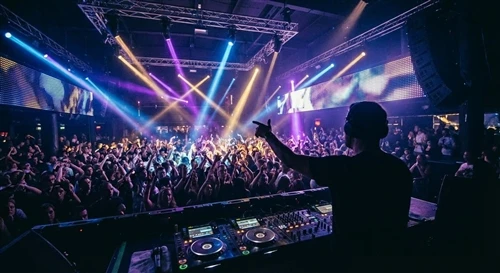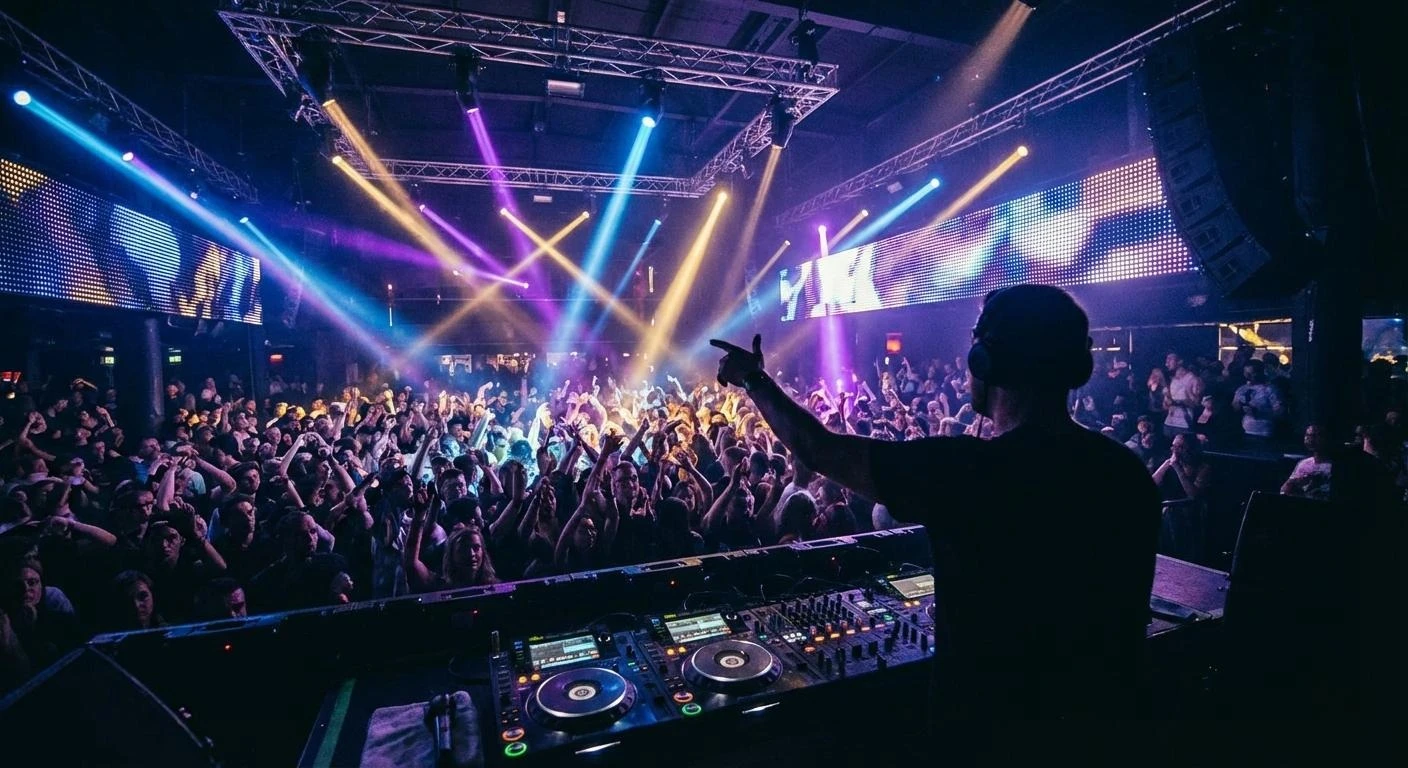
Choosing the right DJ lights can transform an ordinary party into an exciting visual experience. From compact setups for mobile DJs to powerful lighting systems for nightclubs, weddings, concerts, and professional events, the right combination of fixtures helps create atmosphere, highlight the music, and keep audiences engaged.
However, with so many types of DJ lights available, choosing the right equipment can be challenging. Should you invest in moving head lights, beam lights, LED par lights, wash lights, or effect lights? Do you need a powerful professional lighting system, or will a compact setup be enough?
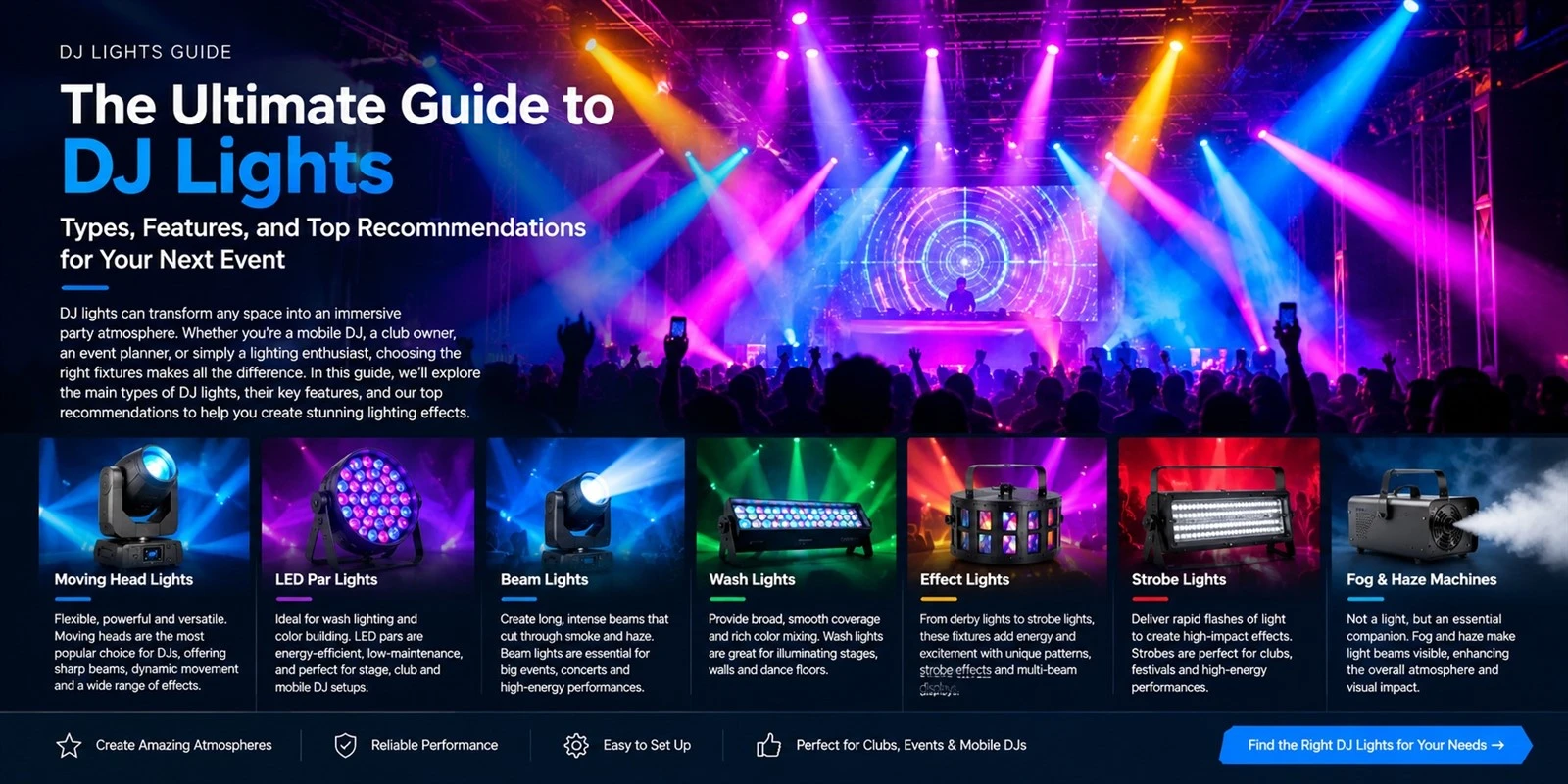
In this guide, we explain the main types of DJ lights, their advantages, and where each fixture works best. We also share practical recommendations to help DJs, club owners, event planners, and lighting rental companies select the right equipment for their applications and budgets.
1. What Are DJ Lights?
DJ lights are lighting fixtures and effects used to create visual atmosphere at parties, clubs, weddings, festivals, and other entertainment events. They work alongside music to produce colorful illumination, moving beams, dynamic patterns, and rhythmic lighting effects.
Modern DJ lighting equipment ranges from simple plug-and-play party lights to professional fixtures featuring precise movement, advanced color mixing, rotating gobos, prisms, and DMX control.
Unlike ordinary room lighting, DJ lighting is designed to create visual impact. Different fixtures perform different functions. Some produce sharp beams that cut through haze, while others provide broad color coverage across a dance floor. Combining these functions creates a more balanced and engaging lighting show.
When selecting DJ lights, it is important to consider the venue size, audience, installation requirements, desired effects, and control system. The best setup is not necessarily the one with the most fixtures. It is the one that delivers the right visual results for the application.
2. Main Types of DJ Lights
Understanding the different types of DJ lights is the first step toward building an effective lighting system.
2.1 Moving Head Lights
Moving head lights are among the most versatile fixtures used in professional DJ lighting. Their heads move horizontally and vertically, allowing beams, colors, and patterns to travel across a venue.
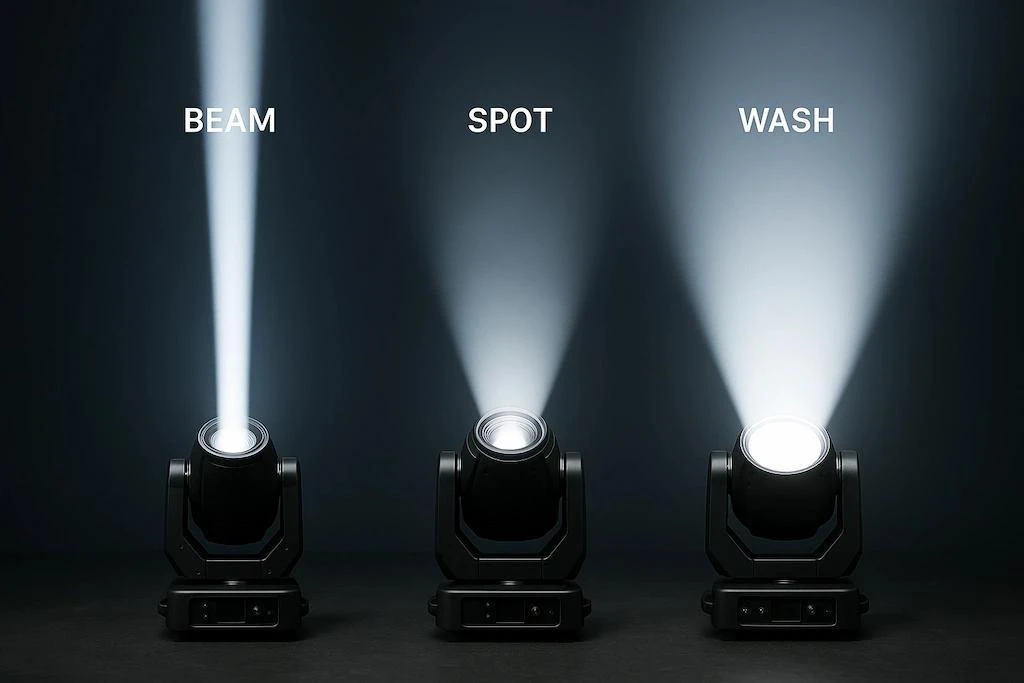
Depending on their optical design and available features, moving head fixtures are commonly divided into beam, spot, and wash types. Some models combine multiple functions in one fixture.
Key advantages:
Dynamic pan and tilt movement.
Programmable lighting effects.
Multiple colors and, depending on the model, rotating gobos and prisms.
Flexible control through DMX512.
Suitable for synchronized lighting shows.
Moving heads are particularly useful for nightclubs, wedding receptions, mobile DJ shows, concerts, and rental productions. They can create sweeping aerial effects, moving patterns on walls, and coordinated movements across a stage.
For smaller venues, compact LED moving heads are often a practical choice because they can provide multiple effects without requiring a large rig. Larger venues may benefit from brighter fixtures with more advanced optics and movement capabilities.
Our recommendation: Choose moving head lights when you need flexible effects rather than a single fixed lighting function. For mobile DJs, consider compact fixtures that balance brightness, weight, setup time, and transport requirements. For clubs and rental companies, prioritize output, reliability, movement speed, and the effects required by your typical productions.
2.2 Beam Lights
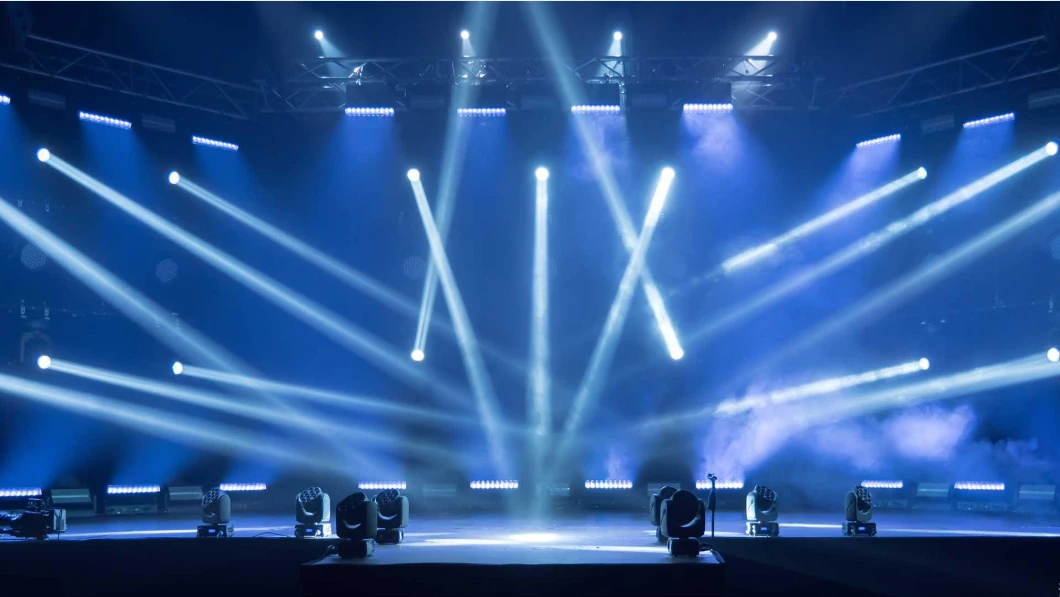
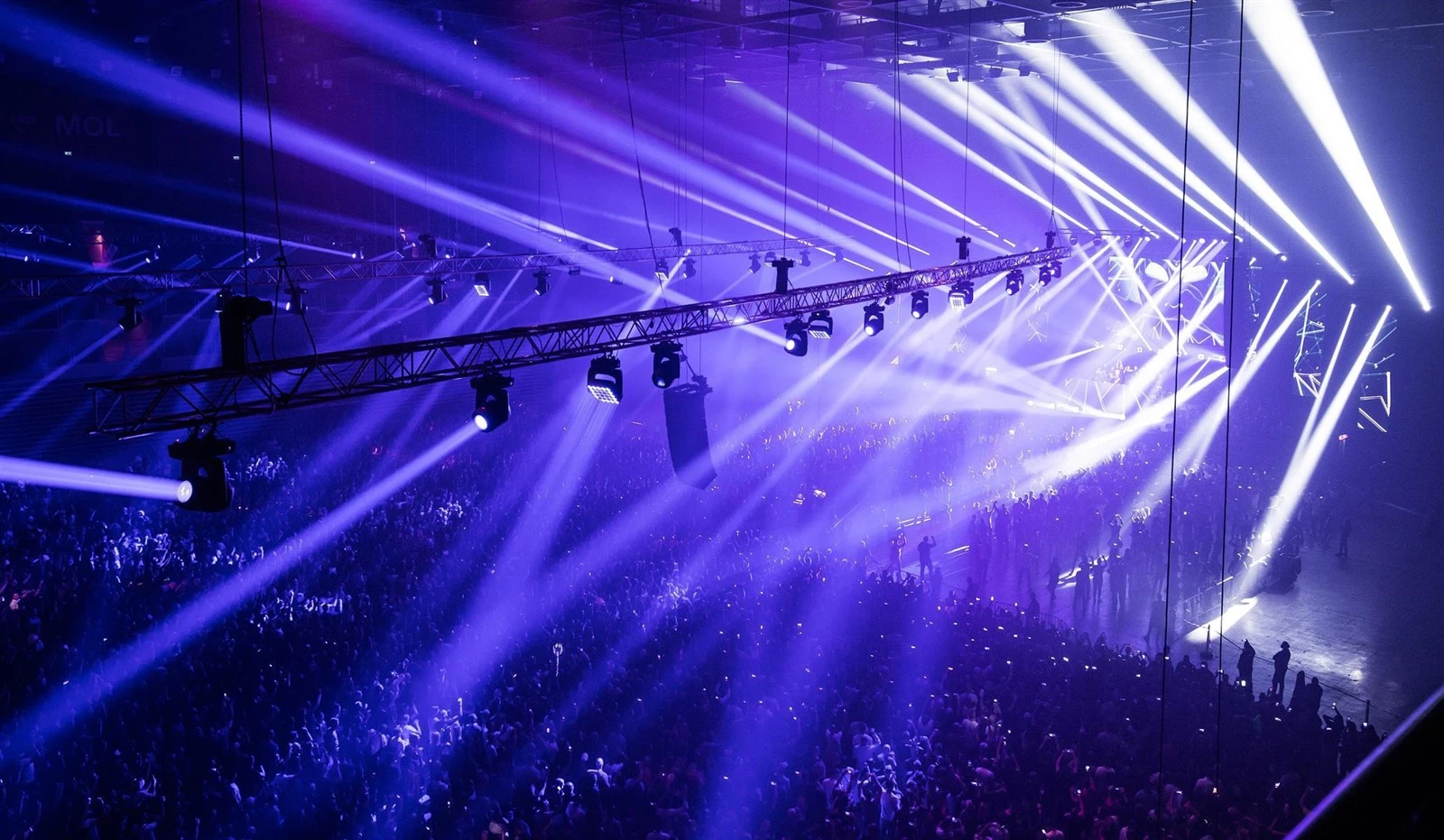
Beam lights are designed to produce narrow, concentrated beams with a strong visual presence. When atmospheric haze is available, these beams become clearly visible in the air, creating the dramatic aerial effects associated with nightclubs, concerts, and electronic dance music events.
Beam fixtures are particularly effective when multiple units are arranged in symmetrical rows or installed on overhead trusses.
Key advantages:
Narrow, concentrated beams.
Strong aerial effects.
Fast visual transitions.
Effective synchronized movement.
Suitable for high-energy music and large stages.
Beam lights work best when the lighting design emphasizes movement, contrast, and intensity. They can create fans, crosses, sweeps, and geometric patterns above the audience.
When comparing beam lights, look beyond the wattage or lamp rating. Beam angle, optical efficiency, source characteristics, output, movement performance, and the actual effect in the intended environment are also important.
Haze can improve beam visibility, but its use should comply with venue policies, fire and ventilation requirements, and applicable safety rules.
Our recommendation: Beam lights are a strong choice for nightclubs, electronic music events, concerts, and rental companies serving high-energy productions. For smaller rooms, select fixtures with suitable output and beam characteristics rather than simply choosing the highest-powered model.
2.3 Spot Moving Head Lights
Spot moving head lights project defined circles of light and can create patterns using gobos. Many models also offer color selection, focus adjustment, prisms, and other optical effects.
Compared with a narrow beam fixture, a spot fixture generally provides more flexibility for projecting recognizable patterns and highlighting specific areas.
Key advantages:
Defined light output for patterns and projections.
Gobo effects for visual texture.
Flexible positioning through pan and tilt.
Multiple color and optical effects, depending on the model.
Useful for both aerial and surface effects.
Spot lights are well suited to wedding receptions, stage performances, clubs, corporate events, and productions where lighting needs to be more varied than simple moving beams.
For example, a spot fixture can project a pattern onto a wall, ceiling, or dance floor, then change color and position as the music develops.
Our recommendation: Consider spot moving heads when you want a fixture that combines movement with pattern projection. Check the available gobos, focus performance, optical quality, and the distance between the fixture and the projection surface before making a purchase.
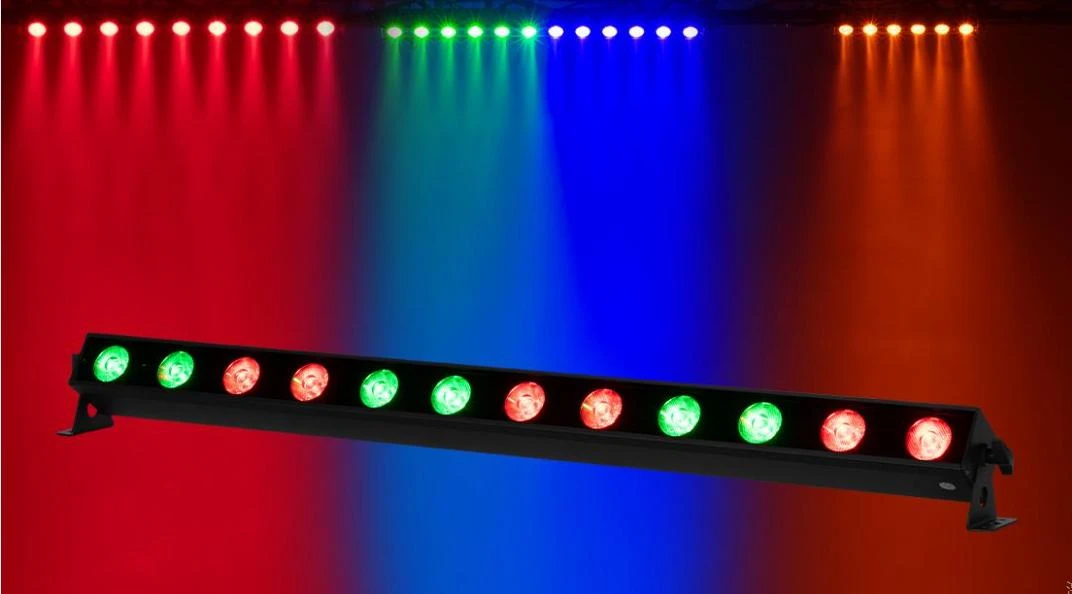
2.4 Wash Lights
Wash lights provide broad, relatively even illumination across a stage, wall, dance floor, or performance area. Instead of creating a narrow beam or sharply defined pattern, they fill an area with color.
LED wash fixtures are popular because they can produce a wide range of colors and can be used for both background lighting and general stage illumination.
Key advantages:
Broad light coverage.
Smooth color mixing.
Flexible color changes.
Useful for background and stage illumination.
Available in static fixtures, moving heads, and linear bars.
Wash lights are especially valuable when a lighting setup needs to look good even when no dramatic effects are running. They can color a wall, illuminate performers, support the visual identity of an event, and complement moving beams.
For mobile DJs, compact wash fixtures can help establish the overall atmosphere without taking up too much space. For clubs and rental companies, moving head wash lights can combine broad coverage with dynamic movement.
Our recommendation: Use wash lights to establish the foundation of a lighting design. Choose the beam angle, color quality, output, and mounting options according to the coverage area. For larger stages, several fixtures may be needed to achieve even illumination.
2.5 LED Par Lights
LED par lights are compact fixtures commonly used for color washing, uplighting, stage illumination, and general event lighting.
They are available in different configurations, including RGB, RGBW, RGBA, and RGBW with additional ultraviolet output. The actual color range depends on the LED engine and fixture design.
Key advantages:
Compact and relatively easy to install.
Flexible color output.
Suitable for wall washing and uplighting.
Low-maintenance LED light sources.
Useful for both permanent installations and mobile setups.
LED pars are popular with wedding DJs, event planners, small entertainment venues, and rental businesses because they can serve several purposes.
For example, a set of LED pars can illuminate a backdrop, add color to a room, highlight architectural features, or provide basic stage lighting. They can also complement moving heads by supplying consistent background colors while the moving fixtures produce more dynamic effects.
Our recommendation: LED par lights are an excellent starting point for buyers who need practical, versatile lighting. When comparing models, check color consistency, dimming performance, beam angle, fan noise where applicable, control options, and housing durability.
2.6 DJ Effect Lights
DJ effect lights create decorative patterns, multiple light beams, rotating effects, or rapidly changing visual sequences. Common examples include derby effects, multi-beam effects, and compact party-light fixtures.
These fixtures are often designed to produce a wide visual effect from a single unit, making them attractive for small parties and mobile DJ applications.
Key advantages:
Multiple visual effects from one fixture.
Fast setup for smaller events.
Colorful patterns and moving beams.
Often suitable for standalone operation.
Useful where space and budget are limited.
Effect lights can be particularly useful for birthday parties, private events, small bars, and home entertainment setups. Many models include sound-activated or automatic programs, allowing basic operation without a dedicated lighting console.
However, effect lights are not always a replacement for professional moving heads. Their control flexibility, optical performance, output, and build quality can vary considerably.
Our recommendation: Choose effect lights when convenience and visual variety are more important than precise control. For professional productions, combine selected effect fixtures with dedicated wash, beam, or spot fixtures to achieve a more controlled result.
2.7 Strobe Lights
Strobe lights produce rapid flashes that create high-impact visual accents. They are commonly used during energetic music sections, transitions, drops, and climactic moments.
LED strobe fixtures are available in different output levels and formats, from compact party units to professional fixtures designed for larger stages.
Key advantages:
Strong visual accents.
Rapid flashing effects.
Adjustable output on many models.
Useful for musical transitions and climaxes.
Can complement moving heads and wash fixtures.
A strobe should generally be treated as an effect rather than the primary source of illumination. Short, carefully timed bursts can add impact, while excessive use may make a lighting show uncomfortable or unsafe for some audience members.
Photosensitive epilepsy and other sensitivities must be considered. Follow applicable event safety guidance, venue requirements, and fixture operating instructions.
Our recommendation: Choose a strobe with appropriate output, reliable dimming and flash control, and a suitable mounting arrangement. For professional use, ensure the control system allows the operator to manage intensity and timing precisely.
2.8 Laser Lights
Laser lights create highly defined beams and geometric patterns using laser sources. They are used in some clubs, electronic music events, and specialized entertainment productions.
Unlike conventional LED fixtures, lasers require particular attention to beam exposure and installation safety.
Key advantages:
Highly defined beams.
Distinctive geometric effects.
Strong visual impact in suitable environments.
Potential for synchronized programmed shows.
Laser systems are not appropriate for every DJ setup. Their use may be subject to specific regulations, licensing requirements, and safety standards depending on the country and application.
Our recommendation: Before purchasing a laser system, check local requirements, the product's safety documentation, installation restrictions, and the competence required for operation. For many mobile DJs, moving heads and LED effects provide a more straightforward starting point.
2.9 Fog and Haze Machines
Fog and haze machines are not lighting fixtures, but they can significantly improve the appearance of a DJ lighting system.
Haze creates fine airborne particles that make beams more visible. Fog generally produces a denser cloud, depending on the machine, fluid, and operating conditions.
Key advantages:
Improves the visibility of light beams.
Adds atmosphere to a performance.
Helps reveal the shape and direction of moving beams.
Complements beam, spot, and moving head fixtures.
The correct choice depends on the venue. Haze may be preferable when continuous beam visibility is desired, while fog may be used for more localized effects. Neither should be used without considering ventilation, alarms, venue policies, and audience comfort.
Our recommendation: Treat atmospheric equipment as part of the overall lighting system. Confirm fluid compatibility, output requirements, warm-up time, maintenance needs, and venue restrictions before selecting a machine.
3. Our Top DJ Lighting Recommendations
The best DJ lighting setup depends on the application. Rather than choosing fixtures based on a single specification, consider how each unit contributes to the overall show.
Best for Mobile DJs: Compact Moving Heads and LED Pars
Mobile DJs need equipment that is easy to transport, quick to install, and flexible enough for different venues.
A practical starter system can include two compact moving head fixtures and several LED par lights. The moving heads create motion and visual interest, while the pars provide background colors and general illumination.
When comparing products, prioritize:
Lightweight construction and manageable transport dimensions.
Reliable operation during repeated setup and teardown.
Useful automatic programs for quick deployment.
DMX compatibility when more precise control is required.
A balance between output, power consumption, and price.
This combination offers more flexibility than relying on a single type of party light.
Best for Nightclubs: Beam Lights and Moving Head Wash Lights
Nightclubs often need a lighting system that can produce dramatic aerial effects while maintaining a consistent visual atmosphere throughout the venue.
Beam lights provide concentrated shafts of light, while moving head wash fixtures create broad color coverage. Together, they can support different musical styles and lighting scenes.
For permanent installations, consider:
Fixture brightness and optical performance.
Pan and tilt speed and accuracy.
DMX control and fixture addressing.
Noise levels in relation to the venue.
Service access and long-term maintenance.
Compatibility with the existing rig and control system.
A well-balanced system does not need every fixture to perform every function. Dedicated fixtures can often deliver better results for their intended roles.
Best for Weddings and Private Events: LED Pars and Spot Moving Heads
Weddings and private events typically require a more flexible visual approach than a nightclub. Lighting may need to shift from subtle background colors during dinner to more energetic effects on the dance floor.
LED pars can illuminate walls and decorative features, while spot moving heads add patterns and movement during the party.
Recommended priorities include smooth dimming, attractive color output, manageable noise, easy programming, and a professional appearance in the venue.
For smaller weddings, compact fixtures may be sufficient. Larger ballrooms and outdoor events may require higher output and additional coverage.
Best for Rental Companies: Versatile, Serviceable Professional Fixtures
Rental companies need equipment that performs reliably across different events, venues, and operating conditions.
Instead of choosing products only for their initial purchase price, consider the total cost of ownership. This includes maintenance, spare parts, transport, setup time, downtime, and the ability to use each fixture across multiple applications.
A rental inventory may benefit from a balanced combination of beam, spot, wash, and strobe fixtures. Standardized control options and consistent fixture behavior can also simplify programming and reduce preparation time.
Before purchasing in quantity, evaluate sample units under realistic operating conditions and confirm the availability of technical documentation and after-sales support.
4. How to Choose the Right DJ Lights
Once you understand the main types of DJ lights, use the following factors to narrow your options.
4.1 Match the Fixture to the Venue
A compact room does not necessarily need the same lighting output as a large nightclub or outdoor stage.
For smaller venues, prioritize coverage, flexibility, low noise where necessary, and easy installation. For larger spaces, consider output, throw distance, beam characteristics, rigging requirements, and the number of fixtures needed.
Outdoor events also require appropriate weather protection and installation methods.
4.2 Define Your Lighting Goals
Think about the visual effects you want to achieve.
If you want dramatic aerial beams, start by evaluating beam fixtures. If you need colorful light coverage across a wall or dance floor, look at LED pars and wash lights. If you want movement and projected patterns, consider spot moving heads.
For a more complete system, combine fixtures with complementary functions rather than purchasing several products that all create essentially the same effect.
4.3 Check the Control System
Basic DJ lights may offer sound-activated modes, automatic programs, or remote control. Professional fixtures commonly support DMX512, which allows lighting operators to control parameters and coordinate multiple units.
For more complex systems, consider channel modes, addressing, dimming curves, pan and tilt resolution, fixture profiles, and compatibility with your lighting console.
Some advanced installations may also benefit from network-based control protocols, depending on the production workflow.
If you are building a professional system, verify the exact control features in the product specification rather than assuming all fixtures support the same functions.
4.4 Compare Real Performance, Not Just Wattage
Electrical power consumption does not directly indicate how much useful light reaches the audience.
Optical design, light-source efficiency, beam angle, lens quality, color mixing, and operating conditions all affect performance.
When comparing fixtures, review manufacturer specifications and, where possible, test them at the intended working distance. Consider the actual application instead of selecting a product based on a single headline number.
4.5 Consider Noise, Weight, and Maintenance
These factors are especially important for mobile DJs, wedding venues, and rental companies.
Fans and mechanical movement can generate noise. Heavier fixtures require more careful transport and appropriate rigging. Dust, transport vibration, and frequent use can increase maintenance requirements.
Look for clear maintenance instructions, accessible service components, suitable mounting hardware, and reliable technical support.
4.6 Set a Practical Budget
A complete lighting system includes more than the fixtures themselves. Budget for mounting hardware, cables, DMX distribution where needed, power distribution, control equipment, transport cases, maintenance, and atmospheric equipment if appropriate.
For a limited budget, begin with fixtures that perform essential functions well. Expand the system as your event requirements grow.
5. Recommended DJ Lighting Setups by Budget and Application
The following configurations are starting points, not fixed equipment packages. The number of fixtures and required output will depend on the venue, mounting positions, and desired coverage.
Entry-Level Party Setup
A simple system might include:
Two compact moving head lights or multi-effect fixtures.
Four LED par lights.
A basic controller or supported automatic programs.
This setup is suitable for small private parties, beginner mobile DJs, and compact entertainment spaces. It provides both movement and background color without requiring a large lighting rig.
Mid-Range Mobile DJ Setup
A more flexible setup could include:
Two to four moving head fixtures.
Four to eight LED par or wash fixtures.
One or two strobe or effect fixtures.
A DMX controller and suitable cabling.
This arrangement allows the operator to create different lighting scenes for entrances, announcements, dance sections, and musical transitions.
Professional Club or Rental Setup
A larger system may combine:
Beam moving heads for aerial effects.
Spot moving heads for patterns and projections.
Wash fixtures for broad color coverage.
Strobe fixtures for controlled visual accents.
Appropriate control, distribution, mounting, and safety equipment.
The final configuration should be designed around the venue dimensions, truss positions, viewing angles, power availability, and production requirements.
For all setups, ensure fixtures are mounted securely and operated according to the manufacturer's instructions and applicable electrical, rigging, and venue safety requirements.
6. Common Mistakes When Buying DJ Lighting
Even experienced buyers can make costly mistakes when selecting DJ lighting equipment.
Choosing only by price: A low purchase price may not reflect long-term reliability, maintenance costs, or the quality of the lighting effect.
Ignoring the venue: A fixture that performs well in a small room may not deliver the desired effect across a large dance floor.
Buying too many similar fixtures: Several identical effect lights may provide less versatility than a balanced combination of beam, wash, and spot fixtures.
Overlooking control compatibility: Confirm channel modes, DMX requirements, and fixture profiles before integrating new products into an existing system.
Ignoring service requirements: Professional buyers should check warranty terms, spare parts availability, technical support, and maintenance procedures.
Using excessive effects: Effective lighting design relies on timing, contrast, and variation. Continuous movement and flashing can reduce visual impact rather than improve it.
7. Frequently Asked Questions About DJ Lights
What are the most common types of DJ lights?
The most common types include moving head lights, beam lights, spot lights, wash lights, LED par lights, effect lights, and strobes. Some systems also incorporate lasers and atmospheric equipment.
Which DJ lights are best for beginners?
LED par lights and compact effect fixtures are good starting points because they are often easy to set up and can offer automatic programs. Compact moving heads are another option for beginners who want more flexible effects.
Are moving head lights worth buying for a mobile DJ?
They can be worthwhile if you regularly perform at weddings, parties, clubs, or other events where dynamic movement and programmable effects improve the show. Consider weight, setup time, output, and maintenance before choosing a model.
What is the difference between beam lights and wash lights?
Beam lights produce narrow, concentrated beams that are particularly effective for aerial effects. Wash lights produce broader illumination for coloring stages, walls, and dance floors. They serve different purposes and often work well together.
Do DJ lights need a DMX controller?
Not always. Many fixtures offer automatic or sound-activated modes. A DMX controller becomes more useful when you need precise control, synchronized effects, repeatable scenes, or coordination across multiple fixtures.
How many DJ lights do I need for a party?
There is no universal number. A small private party may work well with a few fixtures, while a large club or stage may require a more extensive system. Start with the venue size, desired effects, coverage requirements, and available mounting positions.
Do I need a haze machine with beam lights?
Haze can make beams much more visible by revealing their paths through the air. However, it is not always necessary, and its use must comply with venue rules, ventilation requirements, and applicable safety guidance.
8. Find the Right DJ Lighting Solution for Your Next Event
The best DJ lighting system combines the right fixtures for the venue, audience, and type of performance. Moving head lights provide flexibility, beam lights create dramatic aerial effects, wash lights establish the atmosphere, LED pars deliver versatile color coverage, and effect fixtures add visual variety.
For mobile DJs, compact and versatile equipment can simplify transportation and setup. For clubs, beam and wash fixtures can create a more immersive environment. For rental companies, reliability, serviceability, control compatibility, and versatility are essential considerations.
At Colorful Light, we understand that different entertainment applications require different lighting solutions. When evaluating professional DJ lighting equipment, consider the intended use, optical performance, control options, and long-term operating requirements.
Looking for professional DJ lighting or moving head fixtures for your next project? Explore the Colorful light collection to compare suitable products and identify a solution for your application.
Choose the right fixtures, build a balanced system, and create lighting experiences that make every event more memorable.
Source: Website: www.c-lighting.com